Description
GI Flat Bars (Galvanized Iron Flat / Cold-Dip Galvanized Flat Bar) | IS 1730 / IS 2062 / IS 2629 Certified
Cold-Dip Galvanized Mild Steel Flat Bars for Outdoor, Corrosion-Prone & Long-Life Applications
Overview
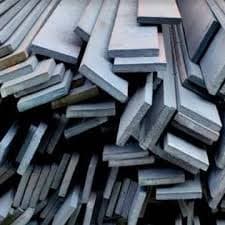
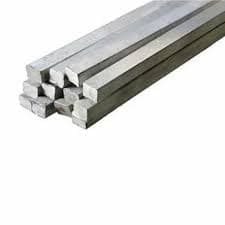
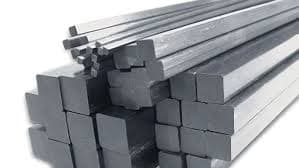
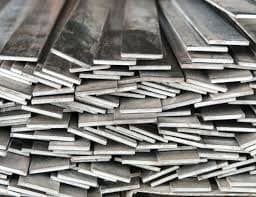
GI Flat Bars, also known as Galvanized Iron Flat Bars, Cold-Dip Galvanized Flat Bars, or simply GI Flats, are rectangular cross-section mild steel bars that have undergone the Cold-dip galvanization process — durable zinc coating. The result is a flat bar that combines the excellent weldability and formability of mild steel with outstanding long-term resistance to corrosion, rust, and environmental degradation.
GI Flat Bars are manufactured from IS 2062 Grade E250 mild steel, dimensioned as per IS 1730:1989, and galvanized in compliance with IS 2629 and IS 4759 — the Indian Standards for Cold-dip galvanizing of iron and steel. The zinc used in the process conforms to IS 209:1992 with a minimum purity of 99.995%, ensuring a coating that is dense, uniform, and tightly bonded to the base steel.
We stock ISI-certified GI Flat Bars with zinc coating.
GI Flat Bar vs MS Black Flat Bar — Which One Do You Need?
| Parameter | GI Flat Bar (Galvanized) | MS Black Flat Bar |
|---|---|---|
| Corrosion Resistance | Excellent — zinc sacrificial coating | Low — prone to rust without painting |
| Surface Finish | Bright zinc / spangle finish | Black mill scale finish |
| Recommended For | Outdoor, coastal, govt. projects, earthing | Indoor fabrication, painted applications |
| Maintenance | Very low — self-protecting zinc layer | Regular painting / coating required |
| Service Life | Increased years depending on environment | Moderate — depends on treatment |
| Cost | Slightly higher upfront | Lower upfront cost |
| Weldability | Good — ventilation required | Excellent |
Rule of thumb: Use GI Flat Bars wherever the structure or component will face outdoor exposure, moisture, rain, coastal air, or where maintenance access is limited. Use MS Black Flat Bars for indoor fabrication, concrete-embedded applications, or where post-fabrication painting will be applied.
Why Galvanizing Outperforms Paint and Primer
- Sacrificial Protection — Zinc corrodes preferentially before the underlying steel, actively protecting the base metal even if the coating is scratched, cut, or damaged during installation
- Complete Coverage — Molten zinc penetrates corners, edges, and hidden surfaces that paint or spray systems cannot coat uniformly
- Metallurgical Bond — The zinc-iron intermetallic layers formed are harder than the base steel itself, providing exceptional resistance to mechanical abrasion during handling and installation
- No Field Touch-Up Required — Unlike painted steel which requires periodic repainting, Cold-dip galvanized sections need no on-site maintenance coating after installation
- Long Proven Service Life — Increased service years in most environments and over 20 year in urban and non-coastal areas
Understanding the Standards
IS 1730 : 1989
Governs the dimensions, tolerances, and sectional properties of mild steel flat bars and plate products used as the base material for GI Flat Bars. Specifies exact width, thickness, length, and dimensional tolerances ensuring consistent interchangeability.
IS 2062 : 2011
Governs the chemical composition, mechanical properties, and quality requirements of the base Cold-rolled mild steel, ensuring minimum yield strength, tensile strength, elongation, and impact toughness are consistently met.
IS 2629 : 1985
Governs the recommended practice for Cold-dip galvanizing of iron and steel — covering pre-treatment, flux composition, bath temperature, and post-treatment requirements for achieving a consistent, high-quality zinc coating.
IS 4759 : 1996
Specifies the minimum zinc coating thickness and mass requirements for Cold-dip galvanized structural steel sections — 86 microns minimum (610 g/m² minimum) for sections above 6 mm thickness.
Together, IS 1730 + IS 2062 define the base flat bar, and IS 2629 + IS 4759 define the galvanizing quality.
Product Specifications
| Parameter | Specification |
|---|---|
| Base Material Grade | IS 2062 E250 (Fe 410W) |
| Dimensions Standard | IS 1730 : 1989 |
| Galvanizing Standard | IS 2629 : 1985 / IS 4759 : 1996 |
| Zinc Coating Thickness | Minimum 86 microns (typical: 86–120 microns) |
| Zinc Coating Mass | Minimum 610 g/m² |
| Zinc Purity | 99.995% as per IS 209 : 1992 |
| Width Range | 12 mm to 150 mm |
| Thickness Range | 3 mm to 25 mm |
| Standard Lengths | 6 m (custom cut-to-length available) |
| Surface Finish | Bright zinc spangle / Cold-dip galvanized |
| Coating Test Standard | IS 2633 (uniformity), IS 6745 (zinc mass) |
| Approvals | MES Approved, Railway Approved, CPWD / PWD Acceptable |
| HSN Code | 7216 |
GI Flat Bar — Size & Weight Reference Chart
| Width x Thickness (mm) | MS Weight (kg/m) | Approx. GI Weight (kg/m) |
|---|---|---|
| 20 x 3 | 0.47 | 0.49 |
| 25 x 3 | 0.59 | 0.61 |
| 25 x 5 | 0.98 | 1.01 |
| 25 x 6 | 1.18 | 1.22 |
| 32 x 5 | 1.26 | 1.30 |
| 40 x 5 | 1.57 | 1.62 |
| 40 x 6 | 1.88 | 1.94 |
| 50 x 5 | 1.96 | 2.02 |
| 50 x 6 | 2.36 | 2.43 |
| 50 x 8 | 3.14 | 3.23 |
| 50 x 10 | 3.93 | 4.04 |
| 65 x 6 | 3.06 | 3.15 |
| 65 x 8 | 4.08 | 4.20 |
| 75 x 6 | 3.53 | 3.63 |
| 75 x 8 | 4.71 | 4.85 |
| 75 x 10 | 5.89 | 6.06 |
| 100 x 8 | 6.28 | 6.46 |
| 100 x 10 | 7.85 | 8.08 |
| 100 x 12 | 9.42 | 9.69 |
GI Flat Bar weights are marginally higher than equivalent MS Black Flat Bars due to the additional zinc coating mass. Confirm exact weights with MTC for critical structural and load calculations.
Mechanical Properties (Base Material — IS 2062 E250)
| Property | Value |
|---|---|
| Min. Yield Strength | 250 MPa |
| Min. Tensile Strength | 410 MPa |
| Min. Elongation | 23% |
| Charpy Impact (min.) | 27 J at 0°C |
Chemical Composition (IS 2062 E250)
| Element | Max. Content |
|---|---|
| Carbon (C) | 0.23% |
| Manganese (Mn) | 1.50% |
| Silicon (Si) | 0.40% |
| Sulfur (S) | 0.045% |
| Phosphorus (P) | 0.045% |
| Carbon Equivalent (CE) | 0.42% max. |
Low carbon content ensures good weldability — GI Flat Bars can be welded using standard methods after grinding off the zinc in the weld zone. Always ensure adequate ventilation when welding galvanized sections to avoid zinc fume exposure.
Key Features & Benefits
- Superior Corrosion & Rust Resistance
- Metallurgically Bonded Zinc Coating — Not Just Paint
- Sacrificial Zinc Protection — Self-Healing at Scratches & Cut Edges
- Service Life of 25–50+ Years in Most Environments
- 86 Microns+ Zinc Coating for Heavy-Duty Protection
- MES, Railway & CPWD Approved
- Zero Maintenance After Installation
- IS 2633 and IS 2629 Deep Test Compliant
- ISI Certified — IS 1730 / IS 2062 / IS 2629 / IS 4759 Compliant
- Mill Test Certificates (MTC) & Zinc Coating Test Reports Available
Applications
GI Flat Bars are specified across a wide range of outdoor, utility, and corrosion-prone applications where long-term performance with minimal maintenance is critical:
Electrical & Earthing Systems:
- Earthing / grounding strips and earth bus bars — one of the most critical and widely used applications for GI Flat Bars
- Electrical substation earthing grids and earth mat conductors
- Lightning protection down conductors and earth termination strips
- Transformer body earthing and equipment grounding connections
- Busbar supports and electrical panel framework in outdoor switchyards
Power Transmission & Telecom:
- Transmission line tower bracing and bolt-on connection flats
- Telecom and communication tower earthing strips and bonding bars
- Power distribution pole flat cross-arms and hardware
- Sub-station structure bracing, clamp plates, and flat connectors
- Railway OHE (Over Head Equipment) structure connection flats
Construction & Infrastructure:
- Lintels, window sill supports, and door frame flat components in outdoor structures
- Stair nosings, treads, and floor plate fixing bars in exposed environments
- Bridge bracing connection flats, gusset plates, and strap connectors
- Coastal and waterfront structural flat connections
- Road sign and highway structure flat bar connections
Industrial & Fabrication:
- Cable tray flat bar supports, hangers, and straps in outdoor and industrial plants
- Conveyor frame flat bar components in food processing and chemical plants
- Outdoor equipment skids, machine bases, and structural flat connectors
- Pipe clamps, saddles, and fixing straps for outdoor pipelines
- Storage racks and shelving in open warehouses and outdoor yards
Agriculture & Rural Infrastructure:
- Greenhouse and polyhouse structural flat bar connectors and ties
- Irrigation system flat bar brackets, supports, and fixing plates
- Farm equipment flat bar reinforcements and structural connections
- Borewell pump mounting flats and water tank structural connections
- Rural electrification structure flat bar components
Marine & Coastal Applications:
- Jetty and dock structural flat bar components
- Port and harbor equipment structural connections
- Coastal building flat bar frame connections and strap ties
Applicable Standards & Certifications
| Standard | Description |
|---|---|
| IS 1730 : 1989 | Dimensions for Steel Plates, Sheets, Strips, and Flats |
| IS 2062 : 2011 | Cold Rolled Structural Steel — Chemical and Mechanical Requirements |
| IS 2629 : 1985 | Recommended Practice for Cold-Dip Galvanizing on Iron and Steel |
| IS 2633 : 1986 | Testing Uniformity of Zinc Coating on Galvanized Articles |
| IS 6745 : 1972 | Determination of Mass of Zinc Coating |
| IS 4759 : 1996 | Cold-Dip Zinc Coatings on Structural Steel and Allied Products |
| IS 209 : 1992 | Zinc Ingot Purity Standard (99.995% min.) |
| ASTM A123 | American equivalent standard for zinc coatings on iron and steel products |
All GI Flat Bars are supplied with zinc coating thickness test reports and Mill Test Certificates (MTC) per EN 10204 3.1 on request.
How to Choose Between GI Flat Bar and MS Black Flat Bar
| Condition | Recommended Product |
|---|---|
| Outdoor, exposed to rain / moisture | GI Flat Bar |
| Coastal, marine, or high-humidity environment | GI Flat Bar |
| Earthing / grounding strips and electrical applications | GI Flat Bar |
| Government / MES / Railway / CPWD project | GI Flat Bar |
| Transmission towers and telecom structures | GI Flat Bar |
| Indoor fabrication, painted after welding | MS Black Flat Bar |
| Embedded in concrete or grouted in masonry | MS Black Flat Bar |
| General fabrication where corrosion is managed | MS Black Flat Bar |
How to Calculate GI Flat Bar Weight
Use this simple formula to estimate the weight of any GI Flat Bar:
Base MS Weight (kg/m) = Width (mm) × Thickness (mm) × 0.00785
For GI Flat Bars, add approximately 2–3% to the MS weight to account for the zinc coating mass:
GI Flat Bar Weight (kg/m) ≈ MS Weight × 1.025
Example: For a 50 x 6 mm GI Flat Bar:
MS Weight = 50 × 6 × 0.00785 = 2.355 kg/m GI Weight ≈ 2.355 × 1.025 = 2.41 kg per metre
Frequently Asked Questions (FAQs)
Q: What is the IS code for GI Flat Bars? GI Flat Bars are governed by four key standards: IS 1730:1989 (dimensions), IS 2062:2011 (base material), IS 2629:1985 (galvanizing process), and IS 4759:1996 (zinc coating thickness requirements). Coating uniformity is tested per IS 2633 and zinc mass per IS 6745.
Q: What is the minimum zinc coating thickness on GI Flat Bars? As per IS 4759, the minimum zinc coating thickness on GI Flat Bars above 6 mm thickness is 86 microns, with a zinc mass of 610 g/m² minimum. Sections between 3–6 mm thickness require a minimum of 45 microns. Most quality suppliers provide 86–120 microns as standard for structural flat bars.
Q: Are GI Flat Bars suitable for earthing and grounding applications? Yes. GI Flat Bars are one of the most widely specified materials for electrical earthing and grounding systems in India. The zinc coating ensures long-term conductivity and corrosion resistance in buried and outdoor earthing applications as per IS 3043 (Code of Practice for Earthing). Commonly used sizes for earthing are 25 x 3 mm, 25 x 6 mm, 40 x 6 mm, and 50 x 6 mm.
Q: How long do GI Flat Bars last outdoors? Cold-dip galvanized flat bars have an expected service life of over 50 years in most rural environments and 20–25+ years in severe urban or coastal conditions — making them a highly economical long-term choice despite the slightly higher upfront cost compared to MS Black Flat Bars.
Q: Are GI Flat Bars approved for MES and Railway projects? Yes. Cold-dip galvanized flat bars conforming to IS 2629 / IS 4759 with the required zinc coating thickness are approved for use in MES (Military Engineer Services), Indian Railways, CPWD, and State PWD projects. Zinc coating test certificates and MTC can be provided on request.
Q: Can GI Flat Bars be welded? Yes, but welding galvanized steel requires proper ventilation and personal protective equipment, as zinc fumes released during welding can be hazardous. It is recommended to grind off the zinc coating in the weld zone, complete the weld, and then touch up the weld area and heat-affected zone with a zinc-rich cold galvanizing compound to restore corrosion protection.
Q: What is the standard length of GI Flat Bars? Standard supply length is 6 meters. Custom cut-to-length is available on request to reduce on-site waste and preparation time.
Q: What is the HSN Code for GI Flat Bars? The HSN Code for Galvanized Iron / Galvanized Steel Flat Bars is 7216.
GI Flat Bars — Cold-Dip Galvanized. Corrosion Proof. The Trusted Choice for Earthing, Outdoor & Long-Life Applications.
Key Features
- Available in Wide Range of Widths & Thicknesses
- Coatings Available — Galvanized
- Consistent Dimensional Accuracy
- Cost-Effective — Economical Per Kg vs. Other Sections
- Easy to Cut, Drill, Punch & Bend
- High Tensile Strength up to 570 MPa
- ISI Certified — IS 1730 / IS 2062 Compliant
- Mill Test Certificates (MTC) Available on Request
- Outstanding Weldability
- Smooth Flat Surface for Clean Joints & Finishes