COVER BLOCK
Description
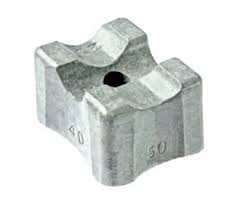
A cement cover block is a small, precast concrete component used in reinforced cement concrete (RCC) construction to maintain the correct and uniform cover distance between steel reinforcement bars (rebars) and the outer surface of the concrete structure. It ensures that the steel reinforcement is properly encased within the concrete, protecting it from corrosion, moisture, and fire.
Material
Made from high-strength cement mortar or micro-concrete, typically with a compressive strength ranging from 25 MPa to 40 MPa or higher, depending on the application requirements.
Available Shapes
Cement cover blocks are manufactured in various shapes including square, rectangular, circular (donut/wheel type), triangular, and chair-type, each suited for specific structural applications such as slabs, beams, columns, walls, and footings.
Common Sizes / Cover Thicknesses
Available in standard cover thicknesses of 20 mm, 25 mm, 30 mm, 40 mm, 50 mm, and 75 mm, as per IS code and structural design specifications.
Applications
Used in foundations, slabs, beams, columns, retaining walls, bridges, tunnels, and all types of RCC structural elements.
Standards Compliance
Manufactured in accordance with IS 456:2000 (Plain and Reinforced Concrete – Code of Practice) and relevant international construction standards.
Why It Matters
Proper concrete cover is critical to the long-term durability and structural integrity of any RCC element. Cement cover blocks provide a reliable, cost-effective, and standardized solution to achieve the specified cover consistently across all construction projects.
Key Features
- - Compatible with all standard rebar sizes and mesh reinforcement
- - High compressive strength and durability
- - Lightweight and easy to install
- - Maintains precise and consistent concrete cover
- - Prevents rebar displacement during concrete pouring
- - Resistant to moisture and chemical attack